
Who we are and what we do
The “European Network for Education and Training e.V.”, shortly EUNET, is a network for European educational-facilities.
The network consists of Non-Governmental-Organisations that inform, educate or in any other way spreads the European Idea to teenagers and adults.
EUNET has the goal to intensify the experience-exchange, to increase the quality of the offers, to develop and distribute methodical-didactic materials as well as simulations and to make the activities of the EUNET-members visible to a wider public.
EUNET is platform for the further education of permanent staff and honorary co-workers of European educational-facilities, as well as agency of the interests of educational and information-facilities opposite regional, national and European institutions and sponsors.
EUNET affiliates, coordinates and forces the different efforts of its members to advance the European integration and to especially integrate the citizens into this process and to make the events on European level more comprehensible.
Beside the numerous events of its members, EUNET initiates different European projects that are organised by our members and partners outside the network.
EUNET
is a member of


The latest news from EUNET Network and its members
Skills for the Future
In a European landscape shaped by accelerating digital transformation, the
growing adoption of Artificial Intelligence, the transition towards a
sustainable economy, and the strengthening of international standards of good
governance, the "Jean
Bart" International Honorary Chair (CIO-SUERD) announces
the launch of its November
2026 session of training, certification, and career guidance
programmes.
Organised as part of the 2026–2027 academic year, the new session continues the
institution's commitment to the internationalisation of education and the
development of professional competencies, in line with the European concept of
"Lifelong Learning".
Within this framework, CIO-SUERD programmes aim to bridge the gap between
theoretical knowledge and the practical application of skills, offering
participants the opportunity to update their expertise, broaden their
professional horizons, or pursue new fields of specialisation.
The main areas of professional courses include:
- European AI Architect
& Strategist
- Expert & Consultant in
Open Governance and Responsible Leadership – OECD
- EU Expert & Consultant
in Sustainability Governance Management – ESG
- International Diplomacy in
the context of Transformative Digitization
The programmes are designed for professionals from the public and private
sectors, managers, entrepreneurs, experts, consultants, representatives of
civil society, as well as individuals interested in career transitions,
pursuing international career opportunities, or further developing
cross-cutting competencies.
Upon successful completion of the programme and its final assessment, graduates
receive a Certificate of
Completion issued by CIO-SUERD, accompanied by a Study Supplement detailing
the modules completed, the competencies addressed, and the assessment methods
applied.
Participants also benefit from personalised guidance, clarification sessions,
and support in preparing for the final assessment, as well as assistance in
identifying potential pathways for further professional development.
Interested individuals are invited to explore the complete range of programmes,
participation requirements, and enrolment procedures on the official CIO-SUERD
platform:
https://ciosuerd.houseofeurope.ro/en/eusdr-international-honorary-chair/
For conformity,
Technical Secretariat
"Jean Bart" International Honorary Chair (CIO-SUERD)
c/o EUROLINK - House of Europe Foundation
Brussels
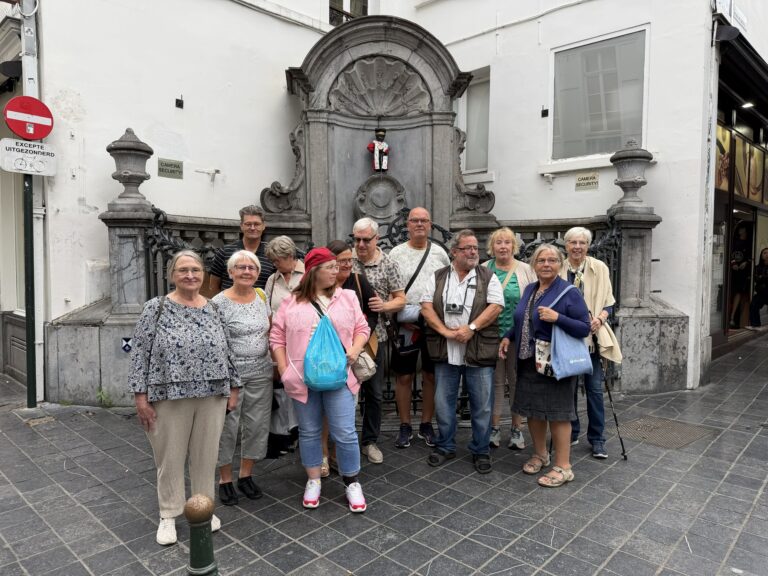
During the first week of September, a group from Europahuset in Gävleborg, Sweden, visited Brussels.
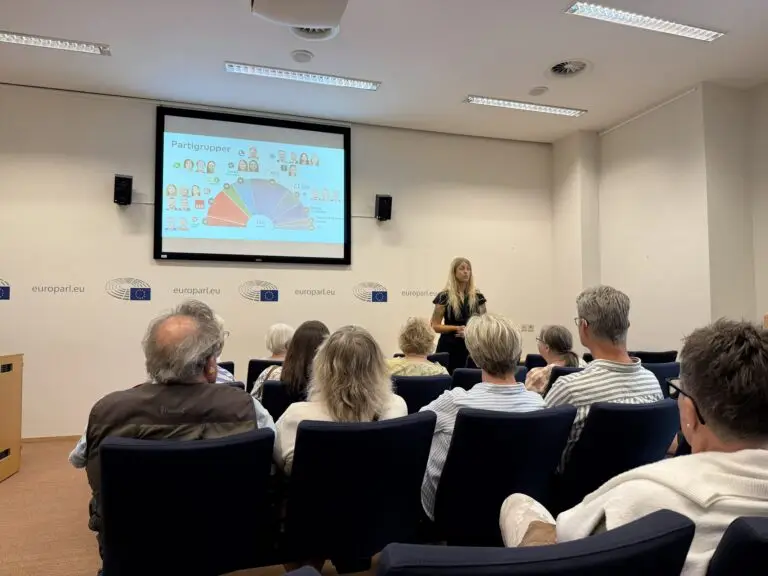
We visited the Parliament, where we met Sofie Eriksson, a Member of the European Parliament (MEP) from Sweden.
She discussed the challenges facing Europe and the EU as she sees them—including conflicts and other issues in our immediate region. How will we manage Europe’s future energy situation?
How do we ensure our industry thrives in the future? How can we compete with other countries going forward?
These were some of the challenges we considered.
We also had the opportunity to meet other Swedish MEPs while visiting Sofie’s office area. Additionally, we attended a meeting of one of the committees on which Sofie serves.
We toured various meeting rooms in the Parliament and learned about the legislative process—from proposal to decision—and who can influence the decisions being made.
We also gained insight into the life of an MEP and the resources available to them.
During the week, the participants also had time to explore more of Brussels, visiting the Parlamentarium and taking a guided tour of the Grand Place, with stops at Manneken Pis, Jeanneke Pis, and other landmarks.
Some members of the group also chose to take a day trip to the beautiful city of Bruges.
The group now has a better understanding of how the EU operates, as well as the importance of being part of the community and how to make their voices heard.
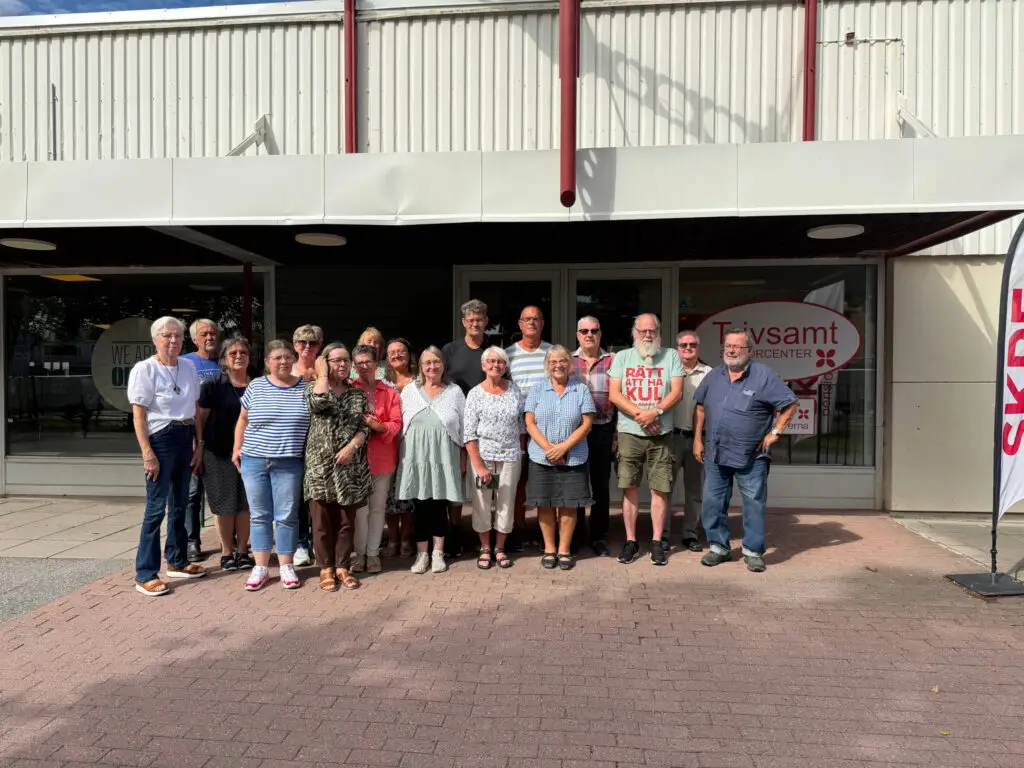
In the spring of 2026, a group of people from Gävleborg in Sweden, gathered for a reading and travel.
There, they learned more about the EU and Europe.
Approximately 18 people have gone through a number of study-circles where they have gone through the history of Europe and how the EU came into being and how it works. They have read about how the EU and its intuitions work today and who represents us there in the Community, parliament, councils, etc.
They have read about Belgium as a country and especially Brussels where much of the administration is located.
At the end of the circle, the intention is to visit Brussels and see more of the Parliament and the Parlamentarium. The group will also see more of Brussels with stops at the Grand Place and other attractions during the trip. Opportunities will also be offered to see more of Belgium during the trip as day trips to different cities will be offered during a travel day.
The trip is possible through a collaboration between SKPF Pensionärerna, the Centre européen Robert Schuman in Scy-Chazelles in France, the Europahuset i Gävleborg
AGORA EU 2028-2034
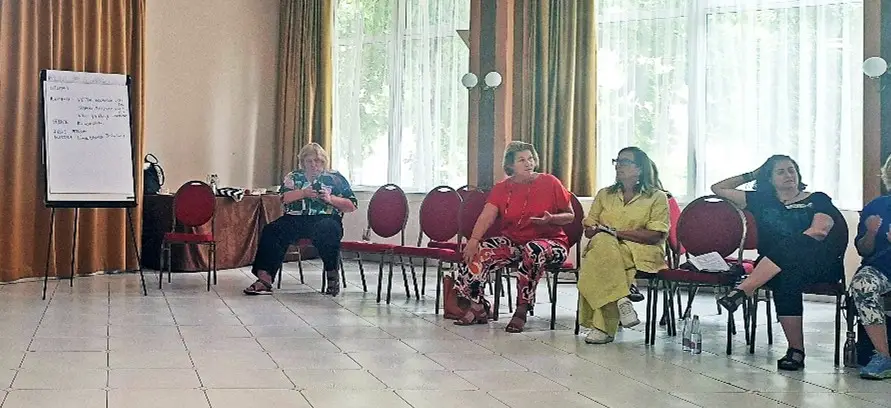
It was a great honor for Mary Pyrgos to be invited to participate at the meeting in Budapest that was organized by the team of MOTERIS project, to discuss AGORA EU 2028-2034 and how it affects civil society organizations and especially women’s organizations.
During the meeting the participants were informed about AGORA EU, and the funds available for civil society.
They were also informed about the current situation and what has been suggested by the Council and the EU Parliament.
Following that they discussed priorities and actions that are required in order to prepare an awareness raising campaign but also an advocacy campaign to improve the situation and make sure that there will be sufficient funds for civil society organisations and especially for women;s organization which get the less funding.
The results of the project will be presented in Lithuania during the EU Presidency of Lithuania, which starts on January 2027.
Board meeting
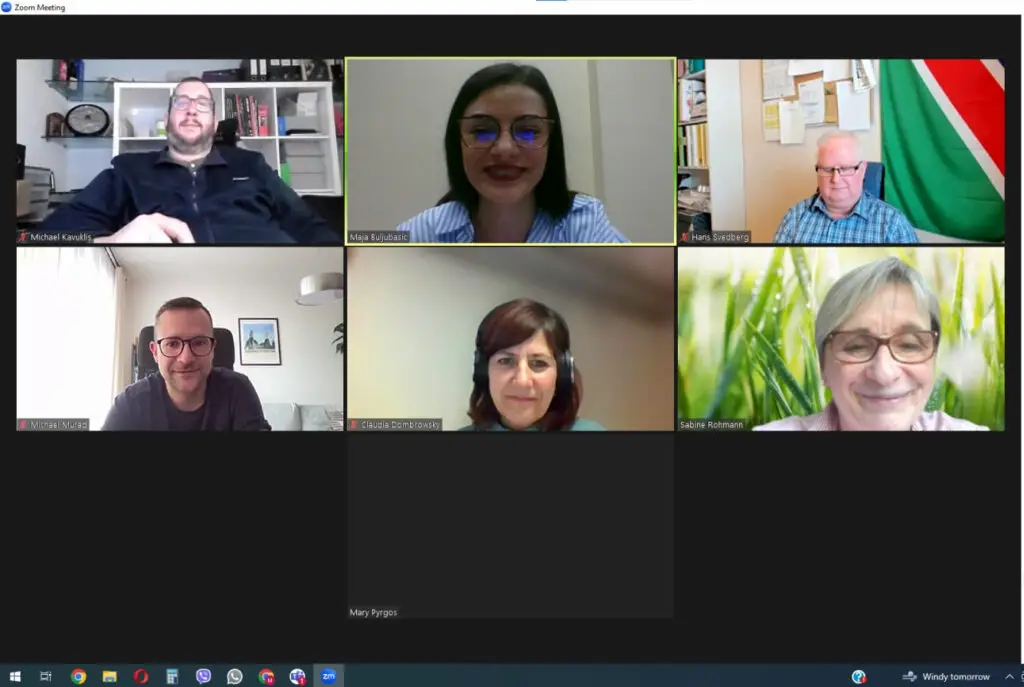
On June 26, a board meeting was held where, among other things, the plans for the General Assembly were discussed.
Other important future issues were also addressed during the meeting.
Plans for continued lectures during the autumn were reviewed.
The board looks forward to an autumn where we can continue to strengthen our work with our member organizations and welcome new members.
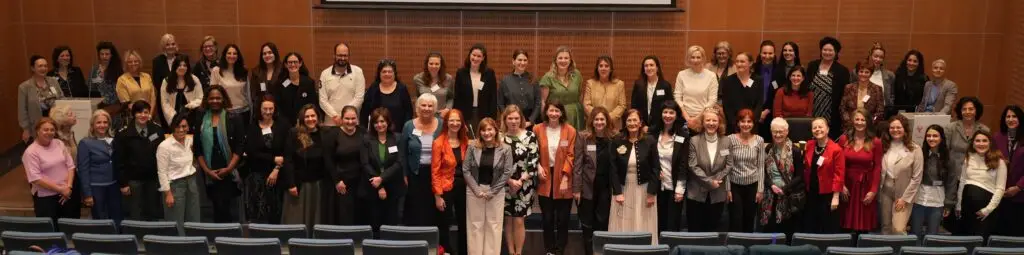
The House of Europe in Nicosia, Cyprus
The House of Europe in Nicosia, Cyprus had a conference where, among other things, the following statement was reached
Nicosia Declaration
Invest in What Matters for People: Placing Gender Equality, Women’s Rights, Care and Social Priorities at the Core of the Multiannual Financial Framework 2028-2034
European Union (EU) budget impacts people’s lives in member states and globally. It also signals what matters for the EU decision-makers and how they see Europe’s future. The EU’s next long-term budget represents a decisive opportunity to safeguard and strengthen the true foundations of prosperity, peace and democracy: gender equality, care and other social priorities, and environmental sustainability. However, the European Commission’s proposal for the Multiannual Financial Framework (MFF) 2028-2034 falls short of responding to challenges faced by people today and fails to prioritise what truly matters for people’s lives.
Gender equality and women’s rights are a long-standing EU value and priority. They are indispensable to democracy, human security, prosperity and resilience in Europe. Yet gender equality and women’s rights and funding to promote them are under attack across the EU. It is therefore more critical than ever that the EU promotes women’s rights and gender equality through its budget and sends a clear signal that these are priorities for the EU as a whole.
What the European Commission Proposes
1. Funding priorities undermine social and gender equality objectives
The proposed MFF reallocates significant resources toward security, defence, and competitiveness. In parallel, funding for gender equality, care, social inclusion and people-centred policies is expected to decline. Without gender equality at its core, a focus on security, defence, and competitiveness will be less effective and generate negative impacts. This shift risks privileging male-dominated sectors and reducing investment in initiatives that contribute to comprehensive security, social resilience and equality. It undermines the EU’s obligations to gender equality under the Treaties, the Sustainable Development Goals (SDGs), and the Women, Peace and Security Agenda and risks increasing inequalities across Member States and the globe.
2. Absence of gender equality objectives in program regulations
Most draft program regulations under the proposed EU budget lack explicit gender equality objectives. As program objectives determine funding allocation, this omission seriously undermines the EU’s ability to deliver on its equality commitments and weakens any meaningful Gender Budgeting approach. The proposals increasingly frame gender equality as a principle to be “taken into account,” rather than as a concrete objective to be financed, implemented and achieved. Only the Global Europe instrument integrates gender equality more systematically as an explicit program objective.
3. Risk of symbolic compliance through limited gender mainstreaming
The proposed Expenditure Tracking and Performance Framework Regulation introduces new horizontal Gender Mainstreaming requirements to a limited degree. Gender Mainstreaming cannot be reduced to tracking expenditures. A comprehensive approach must span the entire budgetary cycle, including legislative basis, program design, implementation, monitoring, reporting and evaluation. While the monitoring framework foresees gender-disaggregated indicators “where appropriate”, it does not define indicators capable of measuring substantive gender equality outcomes. The removal of sound gender mainstreaming provisions, which are integrated in some programmes of the current MFF, creates a serious risk of institutionalising a form of “window dressing” that weakens existing practices and undermines tangible progress toward gender equality.
The Way Forward: Our Call to EU Institutions
These shortcomings must be addressed in the negotiations on the MFF 2028–2034 to ensure that the EU invests in what matters for the people. We therefore call on the European Commission, the European Parliament, and the Council to:
- Prioritise and earmark funding for gender equality, women’s rights, care, social priorities and human security. Key programs for advancing gender equality must be allocated dedicated and sufficient resources, including AgoraEU, the National and Regional Partnership Fund and Global Europe.
- Include explicit gender equality objectives in all funding programme regulations. The Roadmap for Women’s Rights and the Declaration of Principles for a Gender-Equal Society, endorsed by all Member States and EU institutions, provide a strong foundation. Without explicit gender equality objectives, it is unlikely likely that programmes will allocate adequate funding to the promotion of gender equality.
- Establish spending targets for gender equality. An ambitious expenditure target for gender equality should be established for headings 1 and 2, in line with the spending targets for other horizontal priorities, including, climate and biodiversity, and social policies. In external action, we call for a commitment that: (i) at least 85% of funding contributes to gender equality; (ii) at least 20% has gender equality as a principal objective, and (iii) at least 5% is earmarked for women’s rights organisations, recognising their proven leadership in advancing equality in line with the Women, Peace and Security Agenda.
- Integrate comprehensive gender mainstreaming throughout the MFF. Gender mainstreaming must cover all stages of the budgetary process. A dedicated provision should be added to the Performance Framework Regulation and specific gender mainstreaming articles included in each program regulation, building on best practices from the 2021-2027 MFF.
- Strengthen monitoring of gender equality results and improve expenditure tracking. The monitoring framework should be revised to measure progress toward EU gender equality goals. Annex I of the Performance Framework Regulation must be amended to ensure that interventions classified as having gender equality as a principal objective reflect the Declaration of Principles for a Gender-Equal Society and thus ensure financing for EU gender equality priorities.
- Ensure full compliance with EU Treaty obligations. Article 8 of the Treaty on the Functioning of the European Union (TFEU) obliges the EU to eliminate inequalities and promote equality between women and men in all its activities. Provisions in the proposed Performance Framework Regulation, notably Annex IV and Article 7(1), which limit support for gender equality must be deleted or amended to ensure compliance with primary EU law.
- Embed gender equality in National and Regional Partnership Plans (NRPPs). Gender equality objectives must be mandatory within NRPPs. Independent gender equality bodies must have a clearly defined role in their development. This requirement should be explicitly reflected in the NRPP regulation.
The Way Forward: Our Call to People Living in Europe
We call on all people living in Europe to step forward and use their voice to shape the next EU budget. We call on them to use this opportunity – only coming every seven years – and demand their governments, members of national and European Parliament and the European Commission to make the EU budget work for all people.
We count on you and our joint creativity to make our voices echo throughout Europe and in the institutional corridors. The time to make a difference for the lives of people in Europe is now!
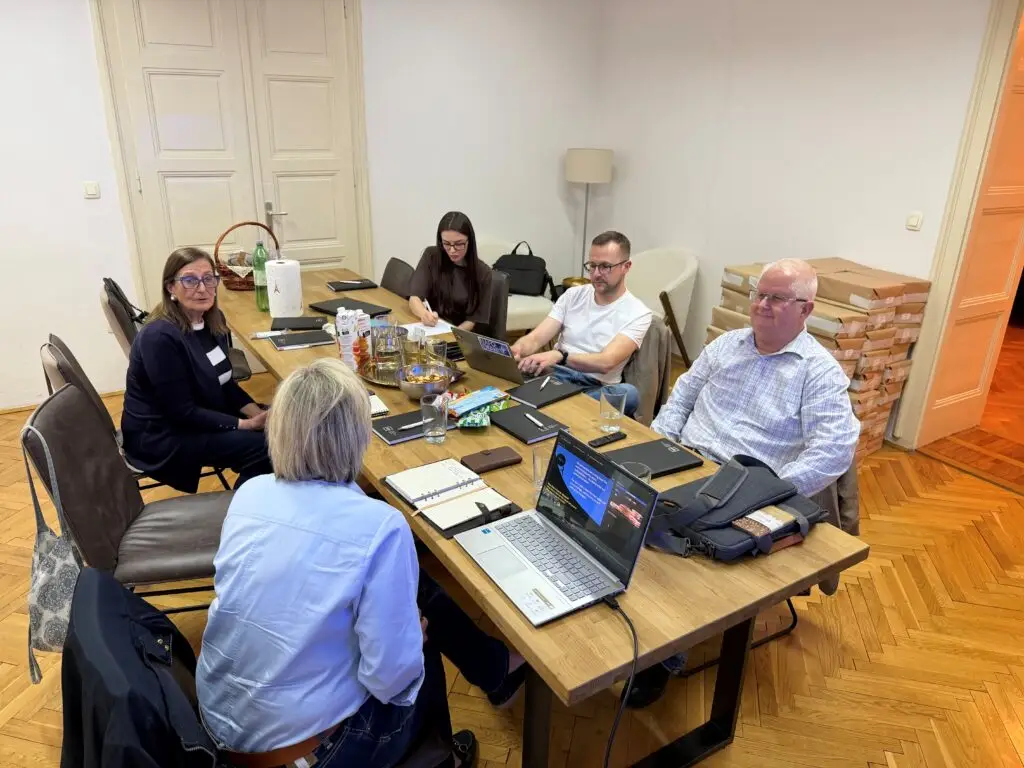
Board Meeting
The board had a board meeting in Zagreb on 24-26 April. There, the board discussed future efforts and what needs to be done within the network. There were many ideas that came up from the board members. This led, among other things, to the board now having meetings every other week to implement what has been planned.
The annual meeting will be held in the autumn/winter of 2026 where, among other things, a new board will be elected and decisions about the future will be made.
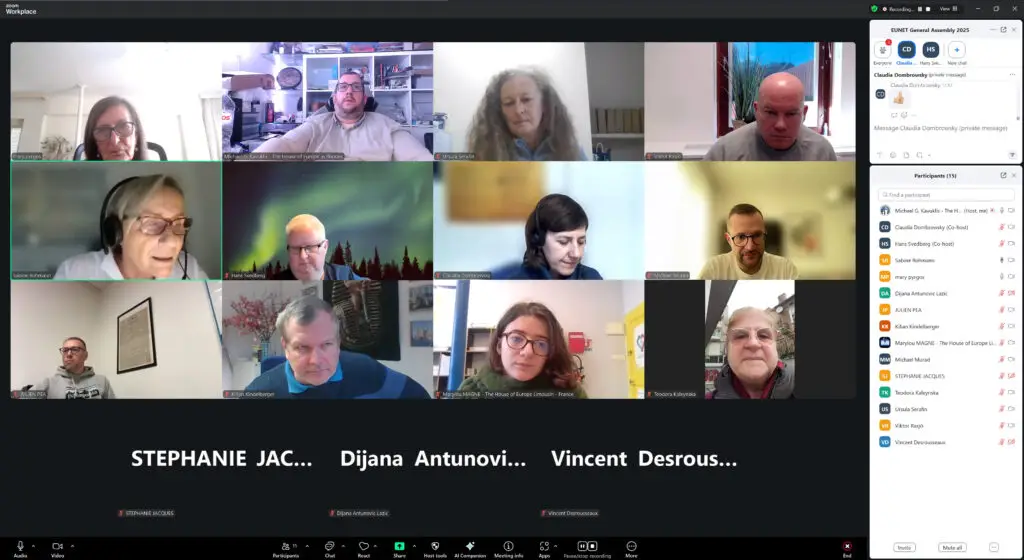
General Assembly 2025
Meeting Summary
The meeting focused on EUNET’s future priorities and the importance of collaboration under the new board. The President highlighted the transition process, ongoing strategic discussions, and the need to connect EUNET’s history with its future development. Key priorities include strengthening EUNET’s visibility, promoting European values and EU integration—especially among young people—expanding the network, securing funding, and creating thematic working groups to address important societal issues.
The Vice-President presented ongoing branding efforts through a renewed website and stronger social media presence to increase EUNET’s visibility and promote member activities. Networking was emphasized as a core value of EUNET, supporting cooperation, skills development, and joint projects across Europe.
Financially, EUNET currently has EUR 16,595 available, highlighting the need to increase fundraising and develop more joint projects. Operational goals include strengthening competences and civic education, improving communication on European issues, fostering European-level cooperation and projects, expanding youth engagement, developing adult education initiatives, promoting European remembrance, and increasing participation in Erasmus+ and mobility programmes. The organization also aims to recruit new members and strengthen engagement through online, local, and regional activities, with the next General Assembly planned in person in autumn 2026.